Keynote speakers

Gabi Lombardo,
European Alliance for Social Sciences and Humanities (EASSH)
Gabi Lombardo

Gabi Lombardo (PhD LSE), is Director of the European Alliance for SSH one of the largest advocacy and science policy organizations in Europe. EASSH advocates for an evidence-based approach to policy-making, and researchers’ inclusion in funding design. High-level experience in science policy research and implementation working in international organisations like London School of Economics, European Research Council and Science Europe. She is a member of several steering boards including CoARA, ERIH Plus, and ERUA. She’s an evaluator for the EU, World Bank, and COST. Gabi received the Young Academy of Europe Prize in 2018.
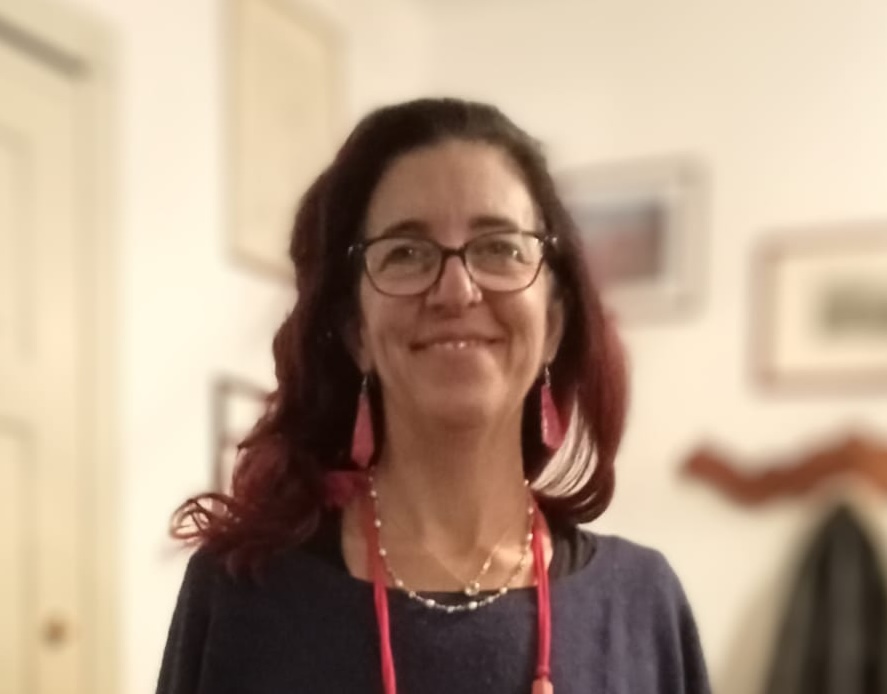
Francesca Di Donato,
Institute of Computational Linguistics of the Italian National Research Council (CNR-ILC)
Francesca Di Donato

Francesca Di Donato is a researcher in political philosophy at the Institute of Computational Linguistics of the Italian National Research Council (CNR-ILC). For over twenty years, her research has focused on the study of open models and systems for the production, management, evaluation, and communication of science (Open Science). In particular, over time she has developed a theoretical interest focused on the conditions of the republic of letters (its practices and means) and on the comparison between the traditional system of science communication, as configured in Enlightenment thinking, and the new paradigms of online digital science communication and their concrete applications. In 2022, she was part of the core group that drafted the Agreement on Reforming Research Assessment. Since 2023, he has been a member of the G7 working group on Open Science, and between 2023 and 2025 she was co-chair of the Italian national chapter of CoARA. Her recent publications concern the reform of research assessment (2022, DOI: 10.5281/zenodo.7433048), research quality and responsible assessment (2024, DOI: 10.5281/zenodo.10890788), and the integration of values and methods for a more effective uptake of Open Science (2024, DOI: 10.6092/issn.2532-8816/20976).